
Lakeville Wood Flooring refinishes engineered hardwood across Lakeville, MN and has worked on wood floors here for more than 20 years, serving surrounding cities including Farmington, Apple Valley, Burnsville, Savage and Elko New Market. Engineered floors are now the majority of what goes into lower levels, condominiums and townhomes around here, and a great many of the ones installed through the 2000s are reaching the point where somebody wants them to look new again.
Whether that is possible is a measurement, not an opinion. The only sandable material on an engineered floor is the wear layer above the tongue, and under the sanding threshold a sander reaches the tongue and ruins the board. So we measure that thickness before quoting anything, at a vent cut or a threshold where a board edge is already exposed, and the number goes on the quote.
When the answer is that your floor cannot be sanded, we say so. A screen-and-recoat is frequently still available and does a great deal for a tired floor, and where even that is gone, replacement is the honest recommendation rather than a sanding that will cut through in the traffic lane. That conversation costs nothing at the quote and a great deal in the middle of a job.
Measuring Before Anything Is Promised
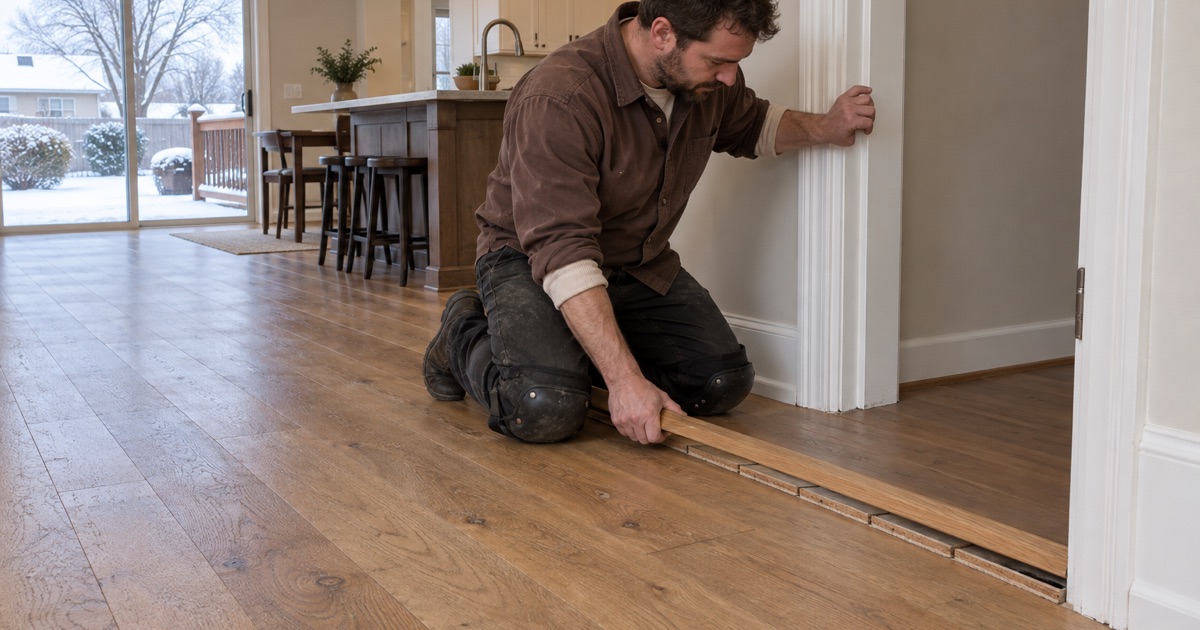
Where the Wear Layer Gets Read
Floor vents, thresholds, stair nosings and the gap under a dishwasher almost always expose a board edge, and that is where we take the measurement rather than cutting a board to find out. Where nothing is accessible, lifting one board inside a closet gives a definitive answer for the cost of a few minutes. What we do not do is estimate the thickness from the brand name or the year it went in.
The Sanding Threshold and What Sits Below It
Below a certain remaining thickness there is no safe full sanding, because a 36-grit cut plus the edger work plus the flattening of the microbevel all consume veneer. Manufacturers state a minimum, and the honest reading of it accounts for the sanding you might want to do again in ten years rather than only this one. We quote to the thickness that is actually there.
Delamination, Adhesion Failure and Other Disqualifiers
Thickness is not the only thing that can rule out a refinish. Plies separating, a wear layer lifting at an edge, hollow spots where a glue-down never bonded, and boards that have already been sanded once all change the answer. We sound the floor and inspect edges before quoting, because these conditions get worse under a sander rather than better.
Refinishing an Engineered Floor Properly
A Lighter Sequence Than a Solid Floor Takes
Where sanding is on, it is run more conservatively than on a solid floor: a finer opening cut where the finish allows it, careful edger work, and a buffer or multi-disc sander to blend rather than aggressive machine passes. Every pass costs veneer that cannot be replaced. The grit sequence going on your floor is written on the quote so the restraint is a commitment rather than a claim.
Losing the Microbevel, and Deciding That on Purpose
Prefinished engineered boards carry a small bevel at each edge, and sanding flattens it. The result reads much more like a site-finished floor, which many people prefer and some do not expect. It also consumes thickness. We raise it at the quote as a decision rather than letting it arrive as a surprise on the first coat.
Finish Systems That Suit a Thin Veneer
With less material underneath, the finish is doing more of the protective work, so a two-component waterborne system is usually the right specification for an engineered floor in a busy household. Waterborne also keeps the wood close to its raw color, which matters when the veneer is a species chosen for its appearance. The number of coats and the sheen are named on the finish schedule.
The Alternative When Sanding Is Off the Table
Screen-and-Recoat on Engineered Wood
A buff and coat abrades the existing finish with an abrasive screen and adds a fresh coat, touching essentially none of the wear layer. On an engineered floor it is often the only maintenance available, and it is genuinely worthwhile: sheen comes back, light scratching disappears, and the floor gets years of additional service. It requires finish everywhere, because a coat will not bond across bare veneer.
The Test Patch That Settles It
We abrade and coat a patch in the worn traffic lane rather than in a quiet corner, then look at how it takes. Where it flashes or refuses to bond, the recoat is off and you have been shown exactly why. Doing this before the quote is signed removes the most common disagreement in this trade.
When Replacement Is the Honest Answer
A floor worn through to bare veneer across its lanes, delaminating, or measuring below the sanding threshold has run out of options, and continuing to sell it maintenance is not a service. We price replacement at that point and tell you what the wear layer measurement was that decided it. Engineered flooring installed since then is generally specified with a thicker veneer, which is worth knowing when choosing the next one.
- 20+ Years in the Trade
- Free Written Estimates
- Moisture Readings on Every Quote